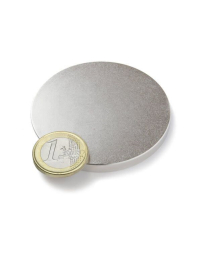
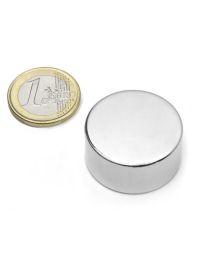
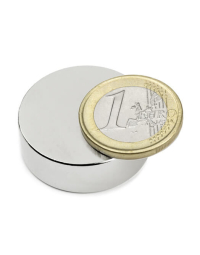
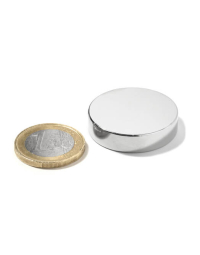
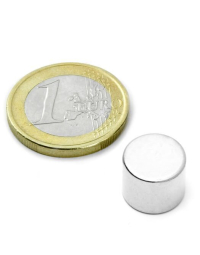
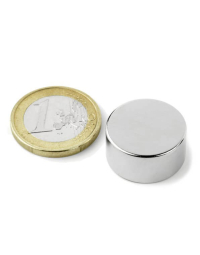
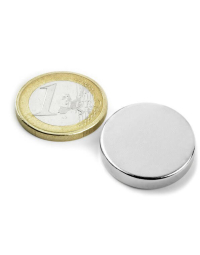
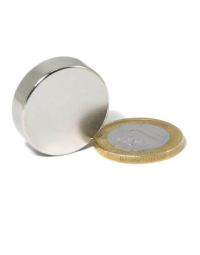
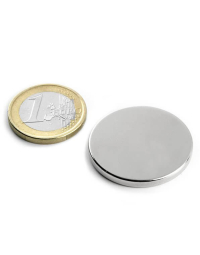
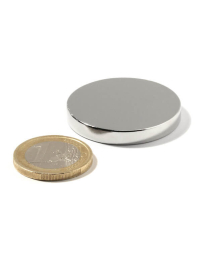
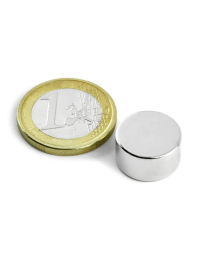
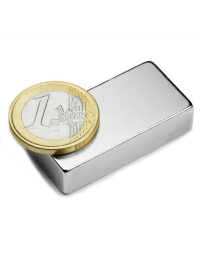
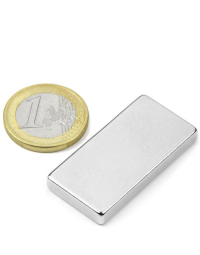
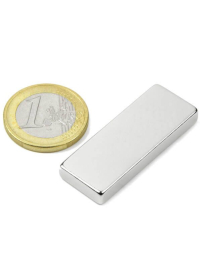
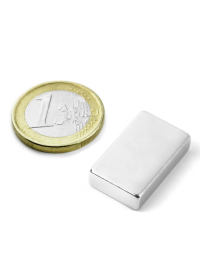
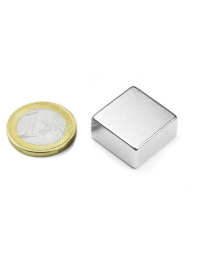
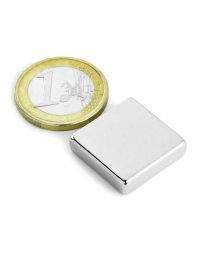
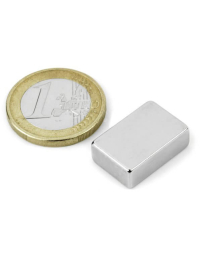
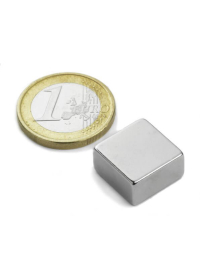
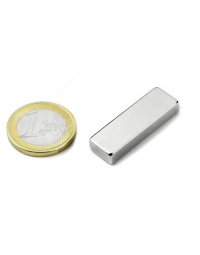
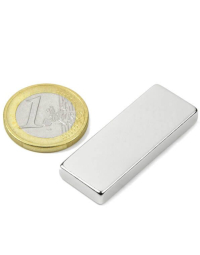
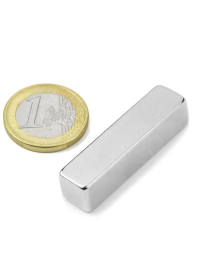
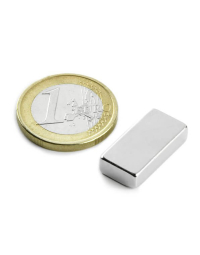
If you want to make a magnetic knife holder out of wood, there are plenty of great tutorials if you search on Google or YouTube. Instead of creating yet another guide on how to make a knife magnet, we will instead help you choose the right magnet for your knife holder and answer the questions you typically have when making a knife holder.
Which magnet should I choose for my knife holder?
To make it easy for you, we have tested a large number of magnets and noted how much distance there can be between the knife and the magnet without the knife slipping down. You'll find this chart a little further down. If you find a magnet in the shop that is not in the chart, we will be happy to do a strength test on it. Just write to info@brisingi.com
How did we test?
To create the chart below, we tested a chef's knife weighing 210 grams. We started with a distance between knife and magnet of 2 mm and gradually increased the distance by 1 mm. For each test, the result was noted in the chart you see below.
Overview table for selecting a blade holder magnet
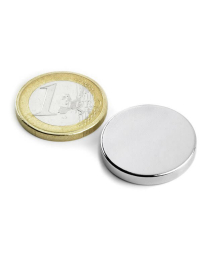
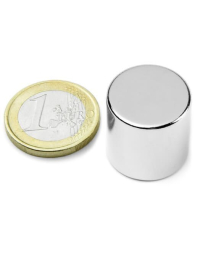
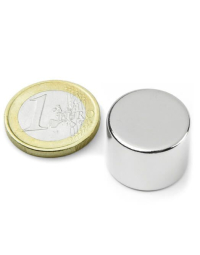
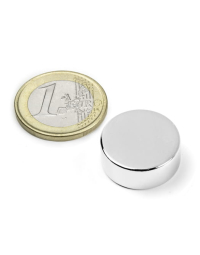
Disc magnets – which one fits your distance?
Find your magnet and see at which distances between magnet and knife it holds well. The numbers are the distance in millimetres.
What do the symbols in "Configuration" mean?
The symbol shows how the magnets were positioned in the knife holder during testing. You can of course place them as you like — but this configuration is the most common for disc magnets.
◯ Tested with a single disc magnet.
| Magnet | Konfiguration | Distance between magnet and knife | |||||||||||||
|---|---|---|---|---|---|---|---|---|---|---|---|---|---|---|---|
| 2 mm | 3 mm | 4 mm | 5 mm | 6 mm | 7 mm | 8 mm | 9 mm | 10 mm | 11 mm | 12 mm | 13 mm | 14 mm | 15 mm | ||
| Disc magnet 15x8 mm | ◯ | ✓ | ✓ | ||||||||||||
| Disc magnet 35x5 mm | ◯ | ~ | ✓ | ✓ | ✓ | ✓ | ✓ | ||||||||
| Disc magnet 30x3 mm | ◯ | ✓ | ✓ | ||||||||||||
| Disc magnet 25x7 mm | ◯ | ~ | ✓ | ✓ | |||||||||||
| Disc magnet 25x5 mm | ◯ | ✓ | ✓ | ✓ | |||||||||||
| Disc magnet 20x10 mm | ◯ | ~ | ✓ | ✓ | ✓ | ✓ | |||||||||
| Disc magnet 12x10 mm | ◯ | ✓ | |||||||||||||
| Disc magnet 20x7 mm | ◯ | ✓ | ✓ | ✓ | |||||||||||
| Disc magnet 20x15 mm | ◯ | ~ | ~ | ~ | ✓ | ✓ | ✓ | ||||||||
| Disc magnet 20x20 mm | ◯ | ~ | ~ | ~ | ✓ | ✓ | ✓ | ||||||||
| Disc magnet 25x3 mm | ◯ | ✓ | |||||||||||||
| Disc magnet 30x7 mm | ◯ | ~ | ~ | ✓ | ✓ | ✓ | ✓ | ✓ | |||||||
| Disc magnet 30x10 mm | ◯ | ~ | ~ | ~ | ~ | ~ | ✓ | ✓ | ✓ | ✓ | ✓ | ✓ | ✓ | ||
| Disc magnet 30x15 mm | ◯ | ~ | ~ | ~ | ~ | ~ | ~ | ✓ | ✓ | ✓ | ✓ | ✓ | ✓ | ||
| Disc magnet 60x5 mm | ◯ | ~ | ✓ | ✓ | ✓ | ✓ | ✓ | ✓ | ✓ | ||||||
Block magnets – which one fits your distance?
Each block magnet is tested in two configurations. The numbers are the distance between magnet and knife in millimetres.
What do the symbols in "Configuration" mean?
The symbol shows how the block magnets were positioned in the knife holder during testing.
▬ Tested with a single block magnet placed horizontally.
⚌ Tested with two block magnets placed horizontally, one above the other.
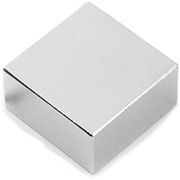
| Magnet | Konfiguration | Distance between magnet and knife | |||||||||||||
|---|---|---|---|---|---|---|---|---|---|---|---|---|---|---|---|
| 2 mm | 3 mm | 4 mm | 5 mm | 6 mm | 7 mm | 8 mm | 9 mm | 10 mm | 11 mm | 12 mm | 13 mm | 14 mm | 15 mm | ||
| Block magnet 20x10x5 mm | ▬ | ||||||||||||||
| ⚌ | ✓ | ✓ | |||||||||||||
| Block magnet 40x10x10 mm | ▬ | ✓ | ✓ | ✓ | ✓ | ||||||||||
| ⚌ | ~ | ~ | ✓ | ✓ | ✓ | ✓ | ✓ | ||||||||
| Block magnet 40x10x5 mm | ▬ | ✓ | ✓ | ||||||||||||
| ⚌ | ✓ | ✓ | ✓ | ✓ | |||||||||||
| Block magnet 30x10x5 mm | ▬ | ✓ | |||||||||||||
| ⚌ | ✓ | ✓ | |||||||||||||
| Block magnet 15x15x8 mm | ▬ | ✓ | |||||||||||||
| ⚌ | ~ | ~ | ✓ | ✓ | |||||||||||
| Block magnet 19x13x6 mm | ▬ | ✓ | |||||||||||||
| ⚌ | ✓ | ✓ | ✓ | ||||||||||||
| Block magnet 20x20x5 mm | ▬ | ✓ | ✓ | ||||||||||||
| ⚌ | ✓ | ✓ | ✓ | ✓ | |||||||||||
| Block magnet 20x20x10 mm | ▬ | ~ | ✓ | ✓ | ✓ | ||||||||||
| ⚌ | ~ | ~ | ~ | ✓ | ✓ | ✓ | ✓ | ||||||||
| Block magnet 25x15x6 mm | ▬ | ✓ | ✓ | ✓ | |||||||||||
| ⚌ | ~ | ~ | ✓ | ✓ | ✓ | ||||||||||
| Block magnet 40x15x5 mm | ▬ | ✓ | ✓ | ||||||||||||
| ⚌ | ~ | ~ | ✓ | ✓ | ✓ | ✓ | ✓ | ||||||||
| Block magnet 40x20x5 mm | ▬ | ✓ | ✓ | ✓ | |||||||||||
| ⚌ | ~ | ~ | ✓ | ✓ | ✓ | ✓ | ✓ | ✓ | ✓ | ✓ | ✓ | ||||
| Block magnet 40x20x10 mm | ▬ | ~ | ~ | ~ | ✓ | ✓ | ✓ | ✓ | ✓ | ✓ | |||||
| ⚌ | ~ | ~ | ~ | ~ | ✓ | ✓ | ✓ | ✓ | ✓ | ✓ | ✓ | ✓ | |||
Questions and answers
Should I use disc or block magnets?
If you're drilling holes in the wood with a drill, disc magnets are the obvious choice as they fit right into the hole. But consider drilling the holes very close together to avoid the blade ‘wobbling’ to the nearest magnet. If you want to use square magnets (block magnets) instead, you can use a cutter to make a groove in the wood. The advantage of block magnets is that they can be joined together to form one long magnet, thus avoiding the aforementioned ‘swallowing’ effect.
For the sake of clarity, we can make this list:
- Disc magnets
- Disc magnets are easy to install as you only need to drill a hole for each magnet.
- It's easy to organise the knives as there will typically be one knife on each magnet.
- If the handle (the heavy end) is facing upwards on the knife holder, you may find that the knife turns sideways or all the way round. You can avoid this by using a stronger/larger magnet or adding a smaller support magnet to prevent the knife from turning.
- Block magnets
- You can make a long continuous magnetic bar so that the knife holder doesn't swing to the nearest magnet, as is the case with disc magnets.
- If you don't have a cutter, it can be difficult to make the groove for the magnets to lie in.
Why are such powerful magnets necessary?
Neodymium magnets are very powerful with direct contact between magnet and metal. When you make a magnetic knife holder, there is a gap between the knife and the magnet. This distance greatly reduces the strength of the magnet. In addition, the knife tends to slide off the knife holder because both the knife and the knife holder are smooth. To avoid this, you need a strong magnet that can hold the knife in place.
How can I avoid choosing the wrong magnet?
If you stick to the overview table, you're off to a good start. If you're still in doubt, consider buying a magnet that's a little too powerful. This is because you can simply increase the distance to the knife by 1 mm at a time until you reach the point where the knife is firmly attached but can also be removed from the knife holder without using too much force. If the magnet is too weak from the start, you lose the ability to increase the distance as the magnet will not have the strength to do so.
Why does the knife turn around when I put it on my knife holder?
If you want the handle of the knife, i.e. the heavy end, to face upwards on your knife holder, you may risk the knife turning round because the heavy end wants to point downwards. There are a few things you can do to avoid this:
- Use magnets that are strong enough to hold the knife firmly enough to prevent it from spinning.
- If you use disc magnets, you can use a strong magnet to hold the knife up. On top of that, place a smaller disc magnet, which only serves to prevent the knife from spinning.
- Make two horizontal rows (===) of block magnets. The two rows ensure that the knife cannot turn.
- Instead of placing the block magnets in a horizontal (----) row, place them vertically with a distance between each magnet ( | | | ).
How do I attach the magnets?
Often the magnets are glued in place. Others clamp the magnets or enclose them in the wood by gluing wood on top of the magnets or simply filling with epoxy.
Which glue should I use?
It's not so important which glue you use. You can use superglue, wood glue, epoxy or whatever you like best. Just avoid exposing the magnets to temperatures higher than 80 degrees. So don't use glue guns. We offer a superglue that we can guarantee will keep the magnets in place. You can find it here:
Which drill bit is best for drilling the holes?
If you know that the distance between magnet and blade will not be less than 4-5 mm, you can use an ordinary wood drill. If the distance between the magnet and the blade is less than 4 mm, you need to be very careful. Most wood drills have a guide tip that sticks out slightly. You risk it drilling all the way through the wood, which you don't want. Instead, consider using a ‘forstner bit’. It has no point and you can drill deeper without breaking through the wood.
If you're drilling holes in the wood with a drill, disc magnets are the obvious choice as they fit right into the hole. But consider drilling the holes very close together to avoid the blade ‘wobbling’ to the nearest magnet. If you want to use square magnets (block magnets) instead, you can use a cutter to make a groove in the wood. The advantage of block magnets is that they can be joined together into one long magnet, thus avoiding the aforementioned ‘wobbling’ effect.
Have you made your own magnetic knife holder?
If you have made your own magnetic knife rail or other project with our magnets, please send us some pictures and some text about how you did it. If we can use the material on our blog, website and social media, you will receive a 15% discount on your next order. Write to info@brisingi.com with your material.
Knife holders submitted by our customers
Have you made your own magnetic knife rail? Send us some pictures and a little text, and you'll get 15 % off your next order if we may use the material. Write to info@brisingi.com.
Click an image to view it larger and find the magnet that was used. Images with a number contain several photos.