
At first glance, neodymium magnets appear to be a metal like iron, for example. However, this is not the case and therefore the magnets behave accordingly. Neodymium magnets are composed of the elements neodymium, iron and boron. In powder form, the substances are pressed together under high pressure to form an ultra-thin alloy, which is typically nickel-copper-nickel. As mentioned, the alloy is very, very thin and its purpose is to protect the magnet from the oxygen in the air. Without an alloy, the magnet will oxidise over time and degrade to its original powder form. From this, we can see that neodymium magnets typically break in two different ways:
- The thin alloy is damaged and the magnet falls apart. The process is faster in humid environments than in dry ones.
- The magnet is damaged because it receives a hard blow.
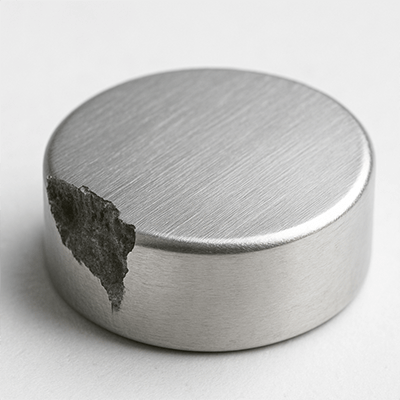
To avoid damage to the magnet, follow these tips
- Keep a distance between two or more magnets so that they are not attracted to each other and collide with great force. This is the most common reason magnets break. The higher the strength of the magnet, the more important it is to keep your distance. This also applies if you use the magnets as whiteboard magnets on a whiteboard. If the magnets are close together, they will bounce off the whiteboard when attracted to a neighbouring magnet.
- Avoid exposing magnets to hard impacts. For example, never use metal tools on a magnet. You risk chipping the magnet and damaging the alloy.
- Position the magnet appropriately. If the magnet is to be used as a locking mechanism in a cabinet, the magnet should be embedded in the wood so that it is flush with the surface. If the magnet is not embedded, repeated blows to the cabinet door will destroy the magnet. If the magnet cannot be recessed, you should instead use pot magnets that can withstand impact.
- Mount the magnet carefully. If you have a magnet that can be screwed on, do so carefully. Do not subject the magnet to a torque higher than 2 Nm.
- Choose the right magnet for the job. There are many types of magnets and it's important to choose the right type for the job. Maybe you need a magnet with a rubber coating or Teflon instead of the standard nickel-copper-nickel. Or maybe a channel magnet is better than the cheaper screw-on magnets. If in doubt, you are always welcome to contact us.
Frequently asked questions from customers
- Your magnets break easily. Are they of poor quality?
- No, our magnets are not of poor quality. If you find that magnets break easily, it's not because of the quality, but the way they are mounted or the usage situation.
- Can you make magnets more durable?
- No, it's not possible. But you can choose the right type of magnet for the job and mount them correctly.
- Are your magnets more or less durable than magnets from your competitors?
- Most of the magnets we sell are made to order directly from a manufacturer. There is no middleman and we therefore have control over how the magnets are produced and how they are quality checked. This ensures that the quality is high and consistent, while our prices are extremely reasonable.