
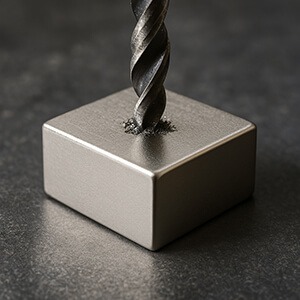
Technically, it is possible to drill or saw into magnets, but it is generally not recommended, especially when it comes to neodymium (NdFeB) and ceramic (ferrite) magnets. Both types of magnets are fragile and extremely difficult to work with. Improper handling will destroy the magnet and you may even injure yourself.
Reasons not to drill into neodymium or ceramic magnets
- Brittleness and fragility: Magnets, especially neodymium and ferrite magnets, are brittle and can easily break or shatter during drilling or sawing.
- Heat sensitivity: High heat during drilling can demagnetise or weaken the magnet.
- Dust and safety hazards: Drilling into magnets produces fine, flammable dust that can ignite or be harmful if inhaled.
- Loss of magnetic properties: Machining can lead to reduced magnetic performance because the magnet shatters into smaller pieces.
Tips for drilling magnets
If you absolutely must try drilling or sawing into a magnet, we have a few tips below. However, the best advice is still not to do it.
- Cooling: Always use plenty of coolant or lubricant (e.g. cutting oil or water) to minimise heat generation.
- Slow speed drilling: Keep the drilling speed very low to minimise heat generation and cracking.
- Light pressure: Apply minimal and uniform pressure to prevent the magnet from cracking or splintering.
- Fix the magnet: Hold the magnet during drilling to prevent it from moving suddenly. For example, use a vice, but use some fabric or similar so that the vice does not damage the magnet.
- Personal protection: Always wear protective equipment, including gloves, safety glasses and dust mask.
Recommended drills for drilling magnets
- Diamond-coated drills: These are the most effective for drilling hard, brittle magnets like neodymium or ceramic magnets.
- Carbide tipped drills: Carbide tipped drills are harder than regular steel drills and can also be suitable, but they are less efficient and wear quickly.
- Avoid steel bits: Regular steel bits are not effective for magnets; they dull quickly, overheat and typically do not make clean holes.
Alternatives to drilling
Instead of drilling or sawing magnets, consider these alternatives:
- Buy pre-drilled magnets: There are many types of magnets that already have holes for mounting.
- Adhesive or epoxy: Use a strong adhesive to attach the magnet so you don't have to drill holes.
We therefore advise that you find a magnet that is the right size from the start. If you need magnets with holes, there are many options. Here are links to some categories of magnets you might find useful: